
Some of the most meaningful moments in Peru happen between the major attractions.
They happen when a market vendor explains an unfamiliar fruit. When an artisan shows how a textile is made. When a local guide connects an archaeological site to a tradition that is still practiced today.
Those experiences are easier to appreciate when travelers understand one simple idea: you are visiting someone else’s home, workplace, community, or heritage site.
Cultural etiquette in Peru is not about memorizing a long list of rules. Peru is a diverse country, and customs vary between cities, regions, families, Indigenous communities, and generations.
Instead, respectful travel starts with observation, listening, asking permission, and relying on local expertise when you are unsure.
Peru’s official tourism resources describe a country where pre-Hispanic heritage remains visible in contemporary art, textiles, music, architecture, food, and regional traditions.
For travelers looking for authentic experiences and meaningful cultural connection, learning how to participate respectfully can make the journey richer for everyone involved.
What Does Cultural Etiquette Mean in Peru?
Cultural etiquette is the way travelers show consideration for the people and places they encounter.
It includes everyday choices such as:
- Whether you ask before taking a photograph
- How you behave inside a religious or archaeological site
- How you interact with vendors and artisans
- How you enter a community space
- Whether you listen before making assumptions
- How you respond when a custom is unfamiliar
There is no single set of behaviors that applies everywhere in Peru.
A neighborhood in Lima, a village in the Sacred Valley, a textile community near Lake Titicaca, and an archaeological site such as Machu Picchu are very different environments.
The most useful rule is simple:
When you are unsure, ask.
A locally based guide or host can often explain what is appropriate in that particular setting.
1. Ask Before Photographing People
Photography is one of the clearest examples of respectful travel.
Peru offers extraordinary visual experiences, from colorful markets and traditional textiles to festivals and everyday street life.
But a person wearing clothing you find interesting is still a person, not part of the scenery.
Make Permission the Default
Before taking a close photograph of someone, make eye contact and ask.
A simple request is usually better than quietly pointing a camera.
If the person says no, lowers their eyes, turns away, or appears uncomfortable, respect the answer.
Do not continue photographing from farther away simply because technically you can.
Be Especially Thoughtful Around Children
Avoid photographing children without the permission of an appropriate parent, guardian, or responsible adult.
The fact that a child smiles at the camera does not automatically mean permission has been given.
A Guide Can Help With Communication
During small-group travel, a local guide can explain when photography is welcome, when permission should be requested, and when it is better to put the camera away.
That is particularly helpful in markets, workshops, community visits, festivals, and religious settings.
2. Remember That Markets Are Working Spaces
A market can be one of the best places to learn about regional food and everyday life.
It is also a workplace.
Vendors are arranging products, preparing meals, serving customers, managing money, and earning a living.
Approach the experience as a guest rather than as though the market were designed for visitors.
Good Market Etiquette
Try to avoid blocking narrow aisles for photographs or standing in front of a stall without allowing customers to approach.
Ask before touching produce or photographing a vendor at close range.
If someone spends time explaining a product and you genuinely want it, purchasing directly from them can be a meaningful way to support their work.
Do Not Assume Bargaining Is Always Expected
Negotiating prices may be normal in some situations and inappropriate in others.
Rather than treating every market purchase as a contest to obtain the lowest possible price, ask your guide what is normal in that particular market.
A small difference in price may matter much more to a vendor than it does to a traveler.
Respectful shopping recognizes the labor behind what is being sold.
3. Treat Handmade Textiles as Knowledge, Not Just Souvenirs
Peruvian textiles can carry generations of technical and cultural knowledge.
UNESCO recognizes the textile art of Taquile, an island in Lake Titicaca, as Intangible Cultural Heritage. Textile production there is connected to community life and traditions that trace back to pre-Hispanic Andean cultures. UNESCO also notes that tourism and increasing demand can influence how textiles are produced and understood.
That context changes the way a traveler can approach a textile demonstration.
Instead of asking only, “How much does this cost?” consider asking:
- What material is being used?
- How long does the piece take to make?
- Who taught you the technique?
- What do particular patterns mean?
- Are natural dyes used?
- Is this style connected to a particular community?
Those questions show interest in the craft and the person creating it.
Avoid Treating Traditional Clothing as a Costume
Clothing may communicate community identity, practical knowledge, family tradition, or social meaning.
Avoid grabbing garments, putting them on without invitation, or using someone’s clothing as a prop for a photograph.
When a host invites participation, follow their guidance.
4. Let Communities Present Their Own Culture
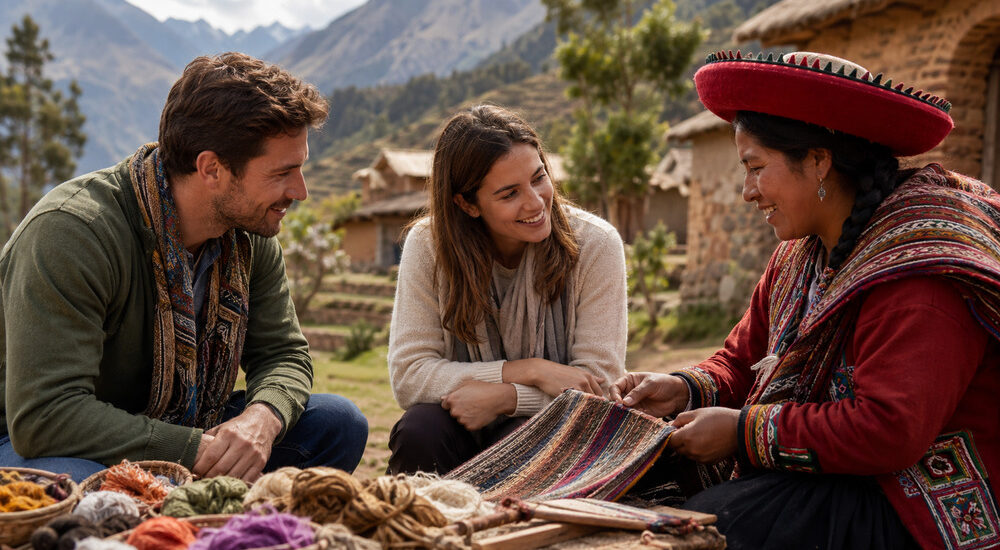
Community visits can be among the most meaningful parts of culturally immersive travel in Peru.
The strongest experiences allow community members to explain their own traditions, work, history, and daily life rather than having outsiders speak for them.
Peru’s official tourism promotion highlights experiences in the Sacred Valley that connect travelers with local weaving traditions and contemporary Andean community life.
Arrive as a Learner
Avoid entering a community expecting people to perform for you.
Instead, listen to how hosts choose to present their work and culture.
Some activities may be created specifically for visitors. Others may be part of ordinary daily life. Your guide should help explain the difference.
Avoid Comparing Communities
Statements such as “This village seems more authentic than the last one” can reduce complex communities to a travel ranking.
Living cultures change.
People use technology, participate in tourism, run businesses, attend university, maintain old traditions, develop new ones, or do all of those things at the same time.
Modern life does not make a community less authentic.
5. Learn the Difference Between Observing and Participating
Travelers are sometimes invited into activities such as cooking, weaving, agricultural work, music, dancing, or ceremonies.
Participation can be a wonderful form of cultural exchange.
But an invitation matters.
Do not assume that because you can see an activity, you are automatically welcome to join it.
Watch what your host does.
Listen to your guide.
If you are invited to participate, follow instructions rather than trying to turn the moment into a performance for photographs or social media.
6. Show Respect at Archaeological Sites
Peru’s archaeological heritage requires a different kind of etiquette.
Historic places are not playgrounds or photo sets.
Cusco, for example, is recognized by UNESCO as a World Heritage Site for its exceptional combination of Inca urban planning and later colonial architecture.
At protected sites, visitor behavior also helps preserve structures for the future.
Do Not Climb, Sit, or Lean on Structures Unless Clearly Permitted
Stone walls can look extremely solid.
That does not mean visitors should touch, climb, or sit on them.
Follow marked routes and instructions from site staff.
Avoid Moving Objects
Do not pick up stones, pottery fragments, plants, or other materials as souvenirs.
Even something that looks ordinary may belong to a protected archaeological or natural environment.
Keep the Setting in Mind
A dramatic photograph should never be more important than conservation or cultural respect.
If a guide or guard tells you that a location is restricted, accept the instruction rather than looking for another way around it.
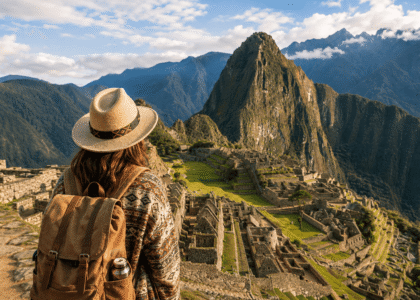
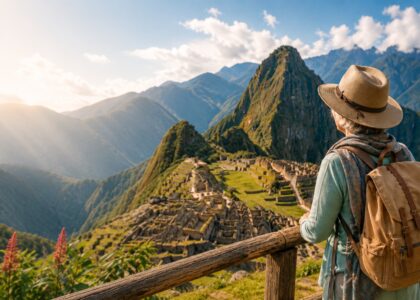
7. Follow Current Rules at Machu Picchu
Machu Picchu has specific visitor rules designed to protect the archaeological site and manage how people move through it.
The current official code of conduct prohibits actions including climbing or leaning on archaeological structures, leaving established visitor routes, creating graffiti, disturbing plants or animals, littering, using drones, and making disruptive noise. It also restricts several types of photography equipment and other objects.
Rules can change.
Before visiting, check the official Machu Picchu website or confirm the latest requirements with your travel provider rather than depending on an old blog post or social-media video.
Respect the Character of the Site
The official code also recognizes Machu Picchu as a place with sacred cultural importance and prohibits activities that interfere with that character.
That is useful context for travelers.
Machu Picchu may be one of the most photographed destinations in the world, but it is more than a backdrop.
Give yourself time to experience it without viewing every moment through a phone.
8. Approach Religious Spaces Quietly and Thoughtfully
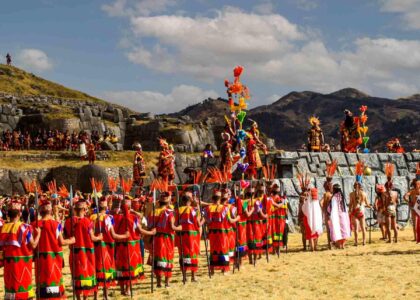
Churches, chapels, temples, shrines, and religious celebrations may be visitor attractions and active places of worship at the same time.
If people are praying or participating in a service, their experience takes priority over sightseeing.
Keep conversations quiet.
Check whether photography is permitted.
Avoid walking into restricted areas.
If a ceremony is taking place, follow instructions from staff or your guide.
Dress requirements can vary by location, so ask beforehand rather than assuming one rule applies everywhere.
9. Learn a Few Words, but Do Not Expect Everyone to Speak the Same Language
Language can create connection even when travelers know only a few phrases.
A greeting, “please,” or “thank you” can communicate effort and goodwill.
Spanish is widely used throughout Peru, while Indigenous languages and linguistic traditions are also important parts of the country’s cultural identity. Peru’s official cultural information highlights the continued influence of pre-Hispanic heritage across contemporary Peruvian life.
You do not need to become fluent before traveling.
What matters is being patient when communication takes longer.
Avoid Making Someone’s English Ability the Standard
A person working in tourism may speak excellent English, some English, or none at all.
None of those situations tells you anything about their intelligence or professionalism.
A bilingual local guide can make conversations easier while allowing hosts to communicate in the language they are most comfortable using.
10. Be Curious Without Turning People Into Questions
Travel opens opportunities to learn about lives different from our own.
Curiosity is valuable.
But every personal question is not automatically appropriate.
Topics involving income, politics, religion, family circumstances, healthcare, or social problems may be sensitive depending on the relationship and setting.
Let conversations develop naturally.
If someone wants to share more, listen.
If they give a short answer or change the subject, do not press for details.
Meaningful cultural connection depends on mutual comfort.
11. Avoid the Search for the “Most Authentic” Experience
Travel marketing often uses the word “authentic.”
It can be useful, but it can also create unrealistic expectations.
Travelers may imagine that authentic Peru exists only in remote villages, traditional clothing, old buildings, or places without other visitors.
Peru is more complex than that.
A contemporary restaurant in Lima is part of Peru.
A teenager using a smartphone in the Sacred Valley is part of Peru.
A centuries-old weaving technique is part of Peru.
A modern artist in Cusco is also part of Peru.
Culturally respectful travel allows places and people to exist as they are rather than expecting them to match an outsider’s image of tradition.
12. Buy Directly When It Makes Sense
Shopping can become part of cultural learning when travelers understand who made an item and how it was produced.
Markets, workshops, cooperatives, and artisan studios may offer opportunities to purchase directly from makers.
Ask questions about materials and techniques.
If an item is handmade, recognize the time involved.
You do not need to buy something from every person you meet.
But when you do purchase, focus on choosing something you value rather than negotiating simply for the experience of bargaining.
UNESCO’s discussion of Taquile textile art shows how tourism demand can affect traditional production, which is one reason thoughtful purchasing matters.
13. Do Not Expect Access to Everything
Thoughtfully planned cultural travel sometimes includes experiences that would be difficult to arrange independently.
That access should not create a sense of entitlement.
A home is still someone’s home.
A workshop is still someone’s workplace.
A ceremony may have moments that are private.
A community may change or cancel an activity.
People should be able to say no.
A respectful travel company and local guide should prioritize the comfort and wishes of hosts as well as travelers.
14. Understand That Small Groups Can Change the Experience
Group size matters in cultural settings.
Ten people entering a workshop create a different atmosphere from forty people arriving at once.
Smaller groups can make it easier to hear explanations, ask questions, move through narrow spaces, and interact without overwhelming hosts.
Small-group travel can also give guides more flexibility to explain cultural context before an interaction takes place.
That preparation matters.
A two-minute conversation before entering a market, home, workshop, or archaeological site can prevent many misunderstandings.
15. Follow Your Guide When Customs Are Unclear
One of the most valuable roles of a local guide is cultural interpretation.
A strong guide can tell you:
“This is a good place to take photographs.”
“Ask first here.”
“We are entering a working space.”
“This part of the ceremony is private.”
“Bargaining is normal here.”
“Prices are fixed here.”
“Please wait until the host invites us inside.”
Those details are difficult to learn from a general travel guide because they depend on the exact place and situation.
Local expertise helps travelers respond to the culture in front of them rather than relying on assumptions.
16. Social Media Does Not Change the Rules of Respect
It is easy to become focused on capturing content while traveling.
Before posting a photograph or video, consider what it shows.
Did the person know they were being photographed?
Would the image embarrass them?
Does the caption reduce a complex community to poverty, exoticism, or stereotypes?
Are children identifiable?
Does the post reveal a private location?
Is a sacred or personal moment being turned into entertainment?
A useful test is simple:
Would I feel comfortable showing this post to the person pictured?
If the answer is no, reconsider sharing it.
17. Respect Wildlife and Natural Environments Too
Cultural respect and environmental respect often overlap.
Landscapes can hold agricultural, historical, spiritual, and community meaning.
At Machu Picchu, for example, the official visitor code prohibits disturbing or removing flora and fauna as well as feeding animals.
Follow marked paths in protected areas.
Do not remove plants, rocks, or other natural objects.
Avoid feeding wildlife for photographs.
Listen to local guides and park staff.
Responsible tourism includes recognizing that the landscape is not simply scenery.
Practical Cultural Etiquette Tips for Peru
Before Your Trip
- Read about the regions you will visit rather than treating Peru as one single culture.
- Learn a few basic Spanish phrases.
- Ask your travel provider how community experiences are organized.
- Find out when photography may be restricted.
- Review current visitor rules for protected heritage sites.
- Learn about the work of artisans or communities included in your itinerary.
During Community and Cultural Experiences
- Greet people before immediately taking photographs or asking questions.
- Listen to the host or guide’s instructions.
- Ask permission before photographing individuals.
- Give people personal space.
- Participate only when invited.
- Avoid making comparisons about which community seems more “traditional.”
- Purchase respectfully when you choose to buy something.
At Archaeological and Heritage Sites
- Stay on designated routes.
- Follow instructions from guides and site staff.
- Avoid touching or leaning on structures.
- Keep noise at an appropriate level.
- Do not remove anything from the site.
- Check current rules before bringing photography equipment.
- Treat cultural heritage as more than a photo opportunity.
A Simple Rule for Respectful Travel: Pause Before You Act
When you enter an unfamiliar situation, you do not need to know every rule.
Pause for a moment.
Watch what is happening.
Listen to your guide.
Ask if you are unsure.
That habit works in markets, homes, workshops, archaeological sites, restaurants, churches, and community experiences.
Cultural respect is often less about knowing the perfect behavior and more about being willing to learn.
What If You Make a Cultural Mistake?
Travelers will occasionally misunderstand something.
If someone corrects you, avoid becoming defensive.
Listen.
Apologize briefly if appropriate.
Adjust what you are doing.
Then continue.
Travel should include learning, and learning sometimes means discovering that an assumption was wrong.
A respectful response matters more than pretending you already understand everything.
Where Travelers Can Get Reliable Help in Peru
Travelers who need official destination information or assistance can also use IPERÚ, PROMPERÚ’s official free information and traveler-assistance service.
IPERÚ provides guidance about destinations, routes, tourism services, and assistance when travelers have problems with contracted tourism services. PROMPERÚ maintains service points around the country as well as remote assistance channels.
Contact details and service locations can change, so travelers should verify the current information through Peru’s official government resources before departure.
Key Takeaways
- Cultural etiquette in Peru is based more on awareness, permission, and listening than on memorizing a universal set of rules.
- Ask before photographing people, especially in markets, community settings, workshops, and around children.
- Treat artisans, vendors, guides, and community hosts as professionals rather than as attractions.
- Follow official rules carefully at archaeological sites such as Machu Picchu, where visitor conduct is regulated to protect cultural and natural heritage.
- Local expertise can help travelers understand customs that vary by region and situation.
- Meaningful cultural connection grows when travelers arrive with curiosity rather than expectations about what Peru should look like.
Frequently Asked Questions
Should I ask before taking photos of people in Peru?
Yes. Asking permission is a respectful habit, particularly for close-up portraits, community visits, workshops, markets, ceremonies, and photographs involving children. Your guide can help if language makes the request difficult.
Is it okay to bargain in markets in Peru?
It depends on the setting. Some sellers may negotiate while others use fixed prices. Rather than assuming bargaining is expected everywhere, ask a local guide what is appropriate. When buying handmade work, remember that the price reflects materials, skill, and time.
What should I know before visiting Indigenous communities in Peru?
Enter as a guest and learner. Follow instructions from community hosts and guides, ask before taking photographs, participate only when invited, and avoid treating daily life or traditional clothing as entertainment. Customs vary between communities, so local guidance is especially important.
Are there special behavior rules at Machu Picchu?
Yes. Machu Picchu has an official code of conduct covering visitor routes, archaeological structures, noise, photography equipment, wildlife, waste, prohibited objects, and other behavior. Travelers should review the current official rules before visiting because regulations can change.
How can I have more meaningful cultural experiences in Peru?
Choose experiences with enough time for conversation, use knowledgeable local guides, learn about the places you visit before arriving, ask thoughtful questions, support artisans when appropriate, and leave room to listen rather than trying to document every moment.
Conclusion
Respectful travel does not require knowing everything before you arrive.
It requires being willing to notice, listen, and learn.
Peru’s cultures are not exhibits preserved for visitors. They are living, changing traditions practiced by people with their own businesses, families, beliefs, communities, and perspectives.
That is what makes culturally immersive travel so valuable.
A good journey gives travelers the chance to see remarkable places while also understanding the people and stories connected to them.
Ask before taking the photograph.
Listen before forming the conclusion.
Let local guides and hosts explain their own communities.
Follow the rules that protect heritage sites.
And give yourself enough time to have conversations that cannot be scheduled into a five-minute stop.
That approach creates a journey based not simply on seeing Peru, but on experiencing it with greater understanding.
At Explorify, we believe meaningful travel should feel personal, well-supported, and deeply connected to the places and people you visit. If you’re looking for thoughtfully planned small-group travel with local expertise, cultural depth, and a human approach, we’re here to help.